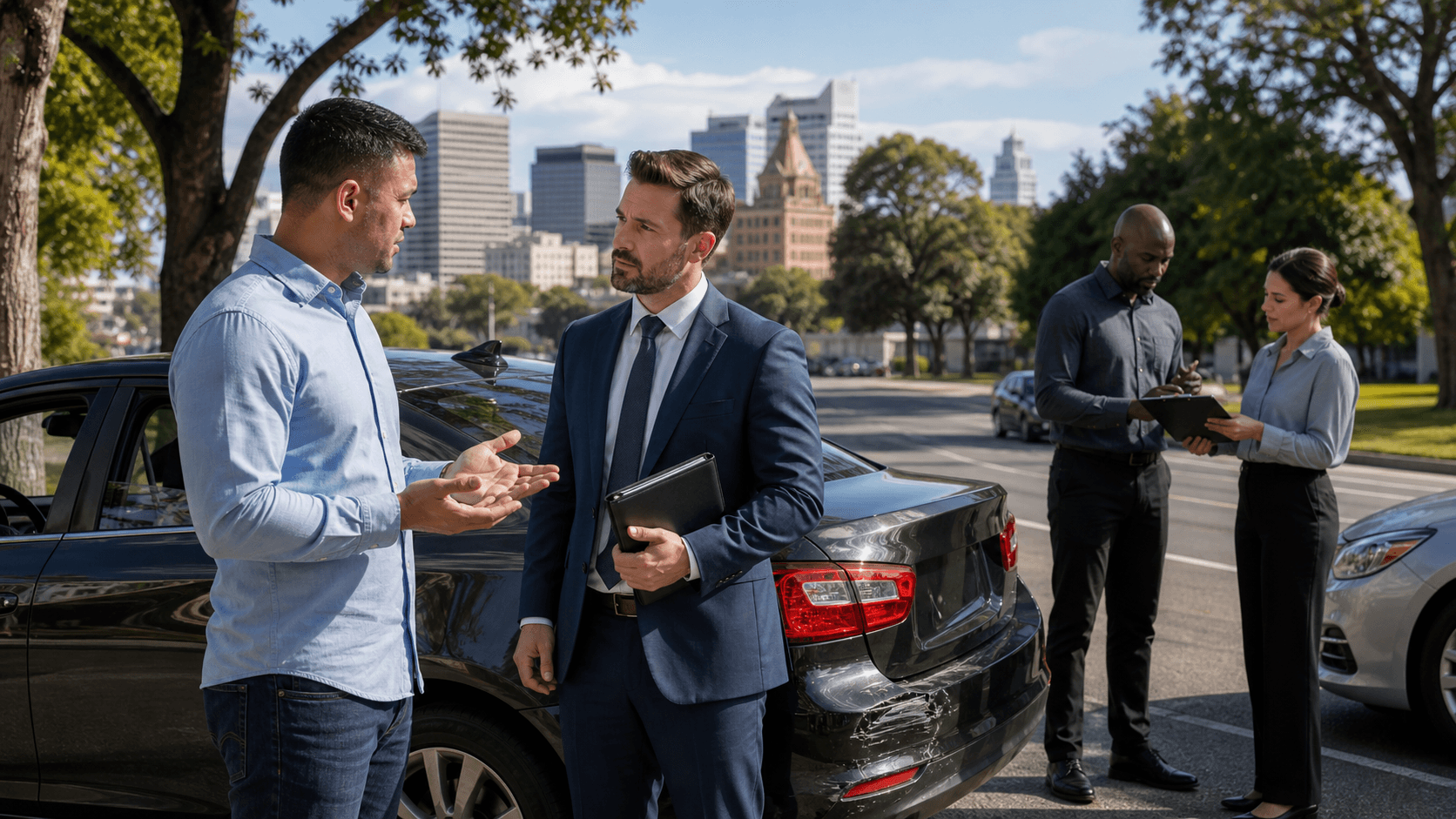
Protect Your Claim After an Oakland Rideshare Crash
A crash involving an Uber, Lyft, or another rideshare vehicle can raise more questions than a typical Oakland car accident. Whether you were a passenger, another driver, a cyclist, or a pedestrian, we know the insurance coverage may depend on exactly what the rideshare driver was doing in the app when the collision happened.
Oakland traffic creates plenty of risk points, from I-880 and I-580 congestion to pickups near BART stations, downtown nightlife spots, and airport access roads. In early fall, back-to-school traffic, post-Labor Day commutes, sporting events, changing weather, and shorter daylight hours can add to the danger. We recommend getting medical care and preserving records as soon as possible, because early documentation can support both your health and your claim.
Determine Who May Be Responsible for the Crash
The rideshare driver may be responsible when careless driving causes a wreck. Common problems include speeding, distracted driving, unsafe turns, fatigue, failure to yield, and looking at the rideshare app instead of the road.
Still, the driver may not be the only person or company involved. We investigate the full picture instead of accepting an insurance company's first explanation. Depending on the facts, responsibility could involve:
- Another driver who caused or contributed to the collision
- A vehicle owner or an employer connected to the at-fault driver
- A vehicle manufacturer if a defective part played a role
- A public entity if a dangerous roadway condition contributed to the crash
- A bar or restaurant in limited situations involving alcohol-related conduct
Uber and Lyft commonly classify drivers as independent contractors. That can make a direct claim against the company less straightforward, but it does not necessarily prevent access to rideshare company insurance when the driver was actively using the app.
California also follows comparative negligence rules. Put simply, an injured person may still recover damages even if they are accused of sharing some fault. Any recovery may be reduced by that person's percentage of responsibility. Because insurers may try to shift blame, we focus on finding the evidence that tells the real story.
Understand How App Status Changes Available Coverage
One of the first questions we ask is whether the rideshare driver was off the app, logged in and waiting for a request, driving to pick up a rider, or carrying a passenger. Those different periods can lead to very different insurance coverage questions.
When a driver is off the app, the driver's personal auto insurance is generally the first policy involved. Yet personal insurers may question coverage if they believe the vehicle was being used for commercial rideshare activity without the right coverage.
A driver who is logged in and available, but has not accepted a ride, may have more limited rideshare coverage. In California, that coverage may apply only after the driver's personal insurance is unavailable, denied, or not enough to cover the loss. That process can create delays while insurers argue over who should pay.
Coverage is generally stronger once a driver accepts a trip and while a passenger is in the vehicle. California requires transportation network companies to maintain significant liability coverage during a prearranged ride, often up to $1 million. As an Oakland rideshare accident lawyer, we can seek app-status records and other electronic evidence to identify the policy that applies before an insurer tries to minimize the claim.
Preserve Evidence Before It Disappears
The minutes and days after a collision can matter a great deal. Serious injuries may keep you from gathering information at the scene, and that is understandable. In those cases, family members and legal counsel may be able to help preserve records while you focus on medical care.
If you are able, we recommend taking practical steps such as:
- Calling 911 and seeking prompt medical attention
- Getting the police report number and exchanging insurance information
- Photographing vehicles, injuries, traffic signals, road conditions, and landmarks
- Saving the rideshare driver's name, vehicle details, route, trip receipt, and messages
- Writing down what you remember before details begin to fade
Screenshots can be especially helpful. A trip receipt, the ride status, the driver's profile, route information, and the time of the crash may help show whether a trip had been accepted. This can be particularly important around busy Oakland pickup zones, BART stations, event venues, and airport roads.
Other evidence may disappear quickly. Surveillance footage can be overwritten, witnesses can become harder to locate, and dash-camera footage, phone records, and vehicle event data may not be saved forever. We also suggest avoiding social media posts about the crash, recorded insurer statements without preparation, and quick settlements before the full effect of an injury is known.
Seek Compensation That Reflects the Full Loss
An injury claim should account for more than an emergency room bill or a damaged vehicle. Rideshare collisions can lead to fractures, brain injuries, spinal injuries, internal injuries, chronic pain, and emotional trauma. These harms can affect your work, family responsibilities, daily routines, and independence long after the crash scene is cleared.
Depending on the circumstances, a California injury claim may seek compensation for past and future medical expenses, lost wages, reduced earning capacity, rehabilitation, property damage, pain and suffering, and other accident-related losses. When a loved one dies in a collision, eligible family members may be able to pursue wrongful death damages.
Several insurance companies may become involved at once. That can include the rideshare driver's personal insurer, the rideshare company's insurer, another driver's insurer, and your own uninsured or underinsured motorist carrier. Each company may look for ways to limit what it pays. We review the available policies, document the full losses, and handle insurer communications so the claim is not defined by an early offer.
Timing matters, too. California injury claims have filing deadlines, and claims involving government entities may require action much sooner. Waiting can make it harder to secure records and protect your options.
Take Prompt Steps to Safeguard Your Recovery
After an Oakland rideshare crash, put your health first, save all ride and collision records, and be careful about early insurance settlement offers. You do not have to sort out app status, policy limits, or fault allegations by yourself while recovering from an injury.
Keeping medical records, photographs, receipts, witness information, and communications in one place can make a difficult situation easier to manage. Prompt action can also help preserve the evidence needed to respond when an insurer disputes responsibility or downplays the harm caused by the crash.
Guidance for Your Next Steps
Quirk Reed can help you assess your options after a rideshare collision and pursue accountability from the responsible parties. Speak with an Oakland rideshare accident lawyer about the facts of your case and the potential paths forward. To discuss your situation with our team, contact us for a consultation.