A jackknife crash can turn an ordinary drive into a life-changing event in seconds. When a trailer swings across lanes, it can block traffic with little warning and leave people in smaller vehicles with serious injuries. After these wrecks, the driver may seem like the obvious person to blame, but the full story is often much bigger.
At Quirk Reed LLP, we know that finding the cause matters. The main question is not simply who hit whom. It is what made the trailer swing out of control, and which person or company had a duty to prevent it.
Why Jackknife Crashes Demand a Wider Look
A jackknife crash happens when a truck's trailer swings outward and forms an angle with the tractor. The truck may fold in on itself, slide across lanes, or strike nearby vehicles. Sudden braking, loss of traction, excessive speed, unsafe turns, and poorly balanced cargo can all set this movement in motion.
Oakland freeways and truck corridors can make these crashes especially dangerous. Traffic on I-880 and I-580 moves alongside large commercial vehicles, while Port of Oakland routes carry steady freight traffic. A trailer that swings sideways in a crowded lane can leave other drivers with nowhere safe to go.
The visible movement of the truck is often the last part of a longer chain of failures. A driver may have braked hard because another motorist cut them off. A truck may have handled poorly because its tires, brakes, or cargo were not safe. That is why we do not believe fault should be decided from a police report or an early statement alone.
During September and the fall months, the first seasonal rains can make Bay Area roads slick after a long dry stretch. Wet pavement may be part of the picture, but it does not automatically excuse unsafe speed, worn equipment, or poor decisions behind the wheel.
Driver, Carrier, and Cargo Mistakes
Commercial drivers must account for the size, weight, and stopping distance of their trucks. A fully loaded trailer does not react like a passenger car. Following too closely, speeding for conditions, changing lanes abruptly, or braking too hard can all raise the risk of a jackknife.
Driver fatigue may also be a concern. Long shifts and pressure to meet delivery times can affect reaction time and judgment. When we review a serious truck crash, we may look beyond the driver's conduct and consider the work environment that shaped those choices.
A motor carrier may share responsibility when its own practices helped create an unsafe situation. Records can sometimes show whether a company:
- Hired a driver without proper qualifications or training
- Pressured drivers to meet unrealistic delivery schedules
- Ignored hours-of-service concerns
- Allowed unsafe trucks or trailers to stay in service
- Failed to address known safety problems
Cargo can be another major piece of the puzzle. A trailer may become unstable if its load is unevenly distributed, unsecured, too heavy, or loaded without proper care. Depending on the facts, responsibility could extend to a shipper, freight broker, warehouse contractor, loading company, or another party involved in preparing the shipment.
For families facing catastrophic injuries or wrongful death, identifying every responsible party can matter. The available evidence, not assumptions, should determine who may be legally accountable.
Evidence Can Disappear Quickly
Commercial truck evidence is not always available forever. Video can be overwritten, electronic data can be lost, and damaged trucks may be repaired before a complete review takes place. Early action can help preserve materials that may explain why the crash happened.
A jackknife accident attorney in Oakland may seek to preserve the truck, trailer, and records connected to the trip. Depending on the case, useful materials may include:
- Electronic control module and onboard monitoring data
- Dash camera footage and roadway surveillance video
- Driver logs, dispatch messages, and inspection reports
- Maintenance records and repair history
- Bills of lading and cargo-loading information
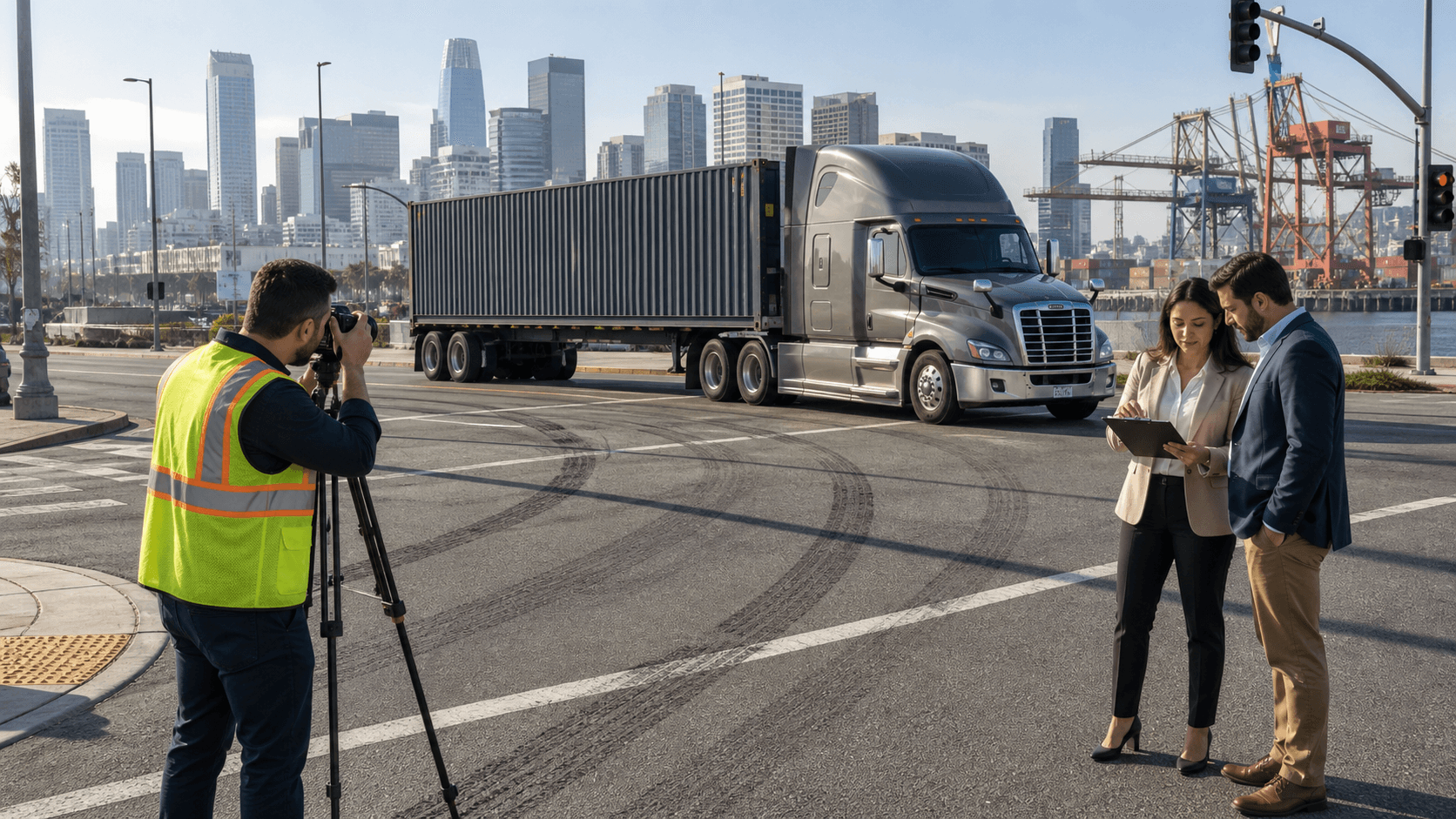
Physical evidence can tell a story as well. Skid marks, debris, vehicle damage, tire conditions, and the final position of the truck may help show how the collision unfolded. Witness memories can fade, so their accounts may be more useful when gathered early. Cell phone data may also help clarify whether a driver was distracted or whether another vehicle made a dangerous move before the truck lost control.
We may work with accident reconstruction professionals to assess details such as speed, braking activity, steering input, tire failure, equipment defects, cargo shifts, and roadway conditions. This deeper review can provide a clearer account than an insurer's quick decision about fault.
How California Fault Rules May Affect a Claim
California follows comparative negligence rules. In plain terms, an injured person may still seek compensation even if an insurer claims they were partly responsible for a crash. Any recovery may be reduced by the percentage of fault assigned to that person.
Trucking insurers may try to shift blame in multi-vehicle collisions. They may argue that a nearby driver braked too suddenly, changed lanes, drove too fast, or failed to avoid the trailer. Those claims should be tested against the full evidence, including what occurred before the truck started to jackknife.
Several parties may have separate responsibilities. Depending on what the evidence shows, a claim could involve the driver, trucking company, cargo handler, maintenance contractor, vehicle manufacturer, another motorist, or a government entity responsible for roadway conditions. Claims involving public entities can have shorter notice requirements, and other California legal deadlines may apply as well.
Damages in a serious truck crash claim may include medical bills, future care needs, lost income, reduced earning ability, pain and suffering, property damage, and wrongful death-related losses. We recommend getting case-specific legal guidance promptly instead of relying on an insurer's early version of events.
Protecting Your Position After a Jackknife Crash
After a jackknife collision, your health comes first. Seek medical care, keep photographs and documents connected to the crash, and save any information you receive from insurers or trucking companies. Before giving a recorded statement, it can help to understand your rights and the information that may be used to shape a fault decision.
A jackknife accident may involve failures by more than one person or company. Acting early can help preserve evidence while records are still available, vehicles have not been repaired, and witnesses can still clearly remember what they saw.
Get Clear Guidance for Your Next Steps
At Quirk Reed, we can assess the circumstances of your crash and explain the legal options available to you. Speak with a jackknife accident attorney in Oakland who can help identify responsible parties and pursue appropriate compensation. Contact us to discuss your case with our team.